

| mobile_3 App Name | Eatventure |
| play_arrow Google Play Link |  |
| tag Version | 1.53.2 |
| data_usage Size | 133 MB |
| folder Category | Simulation |

Mod Info
– Unlimited Money
– Free Purchase
– Free Reward
Introduction
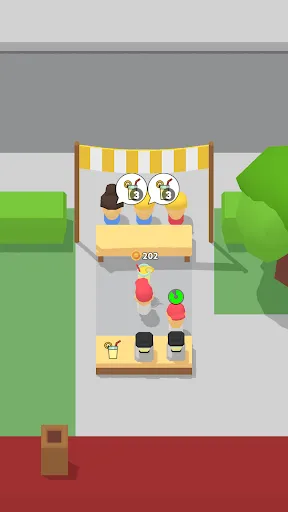
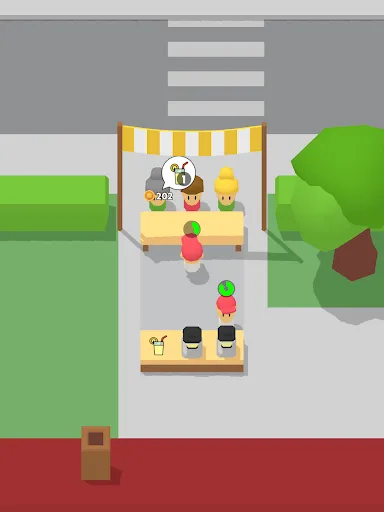
Eatventure is a casual restaurant management game built around a simple idea: start with very little and gradually turn it into a thriving food business. You begin with a small lemonade stand and work your way through larger food establishments as your business improves.
The early moments are deliberately straightforward. Your character prepares food, serves customers, and collects the money they spend. That money can then be used to improve the business. A new station might let you prepare another dish, while an upgrade can make an existing part of the restaurant work faster.
This creates a satisfying rhythm. You make money, spend it on an improvement, and then watch the business become more productive. There is very little to learn at first, so the game can feel comfortable even if you have not played a management game before.
The appeal comes from seeing a modest operation become increasingly busy. What starts as a quiet food stand slowly turns into something that feels much more like a working restaurant.
Keeping the restaurant moving
Much of the gameplay revolves around keeping food production and customer service moving at a steady pace. Customers arrive, food is prepared, orders are delivered, and money comes back into the business.
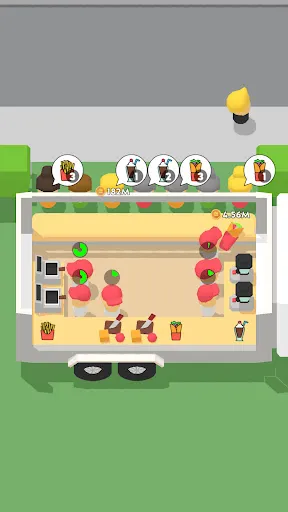
At first, you are closely involved in these tasks. As the restaurant develops, more of the work can be handled by staff. Cooks and cashiers help automate parts of the operation, allowing the business to continue earning while you concentrate on improvements.
That automation changes the feeling of the game. Early progress can feel hands-on because every improvement matters immediately. Later, the restaurant becomes a small system that you are managing rather than personally operating every station.
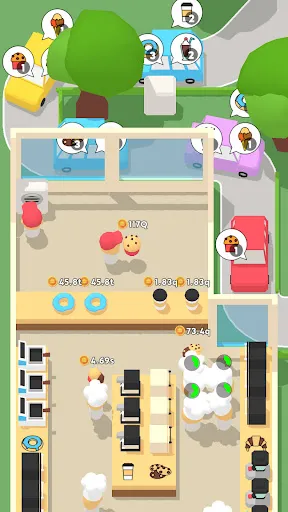
There is also a pleasant visual payoff to this progression. Adding stations and workers makes the restaurant busier. More customers arrive, more food is prepared, and the space gradually feels more active.
Choosing what to improve
The management side of Eatventure is not about complicated spreadsheets or difficult economic planning. Its decisions are much easier to understand. The main question is usually where your next investment will make the biggest difference.
You might improve a food station so it produces orders faster. You might unlock another station to expand the menu. Hiring staff can also reduce the amount of work you need to handle yourself.
These choices give the otherwise relaxed gameplay a small layer of strategy. Spending everything as soon as you earn it is tempting, but the order in which you improve the restaurant can affect how quickly it develops.
That sense of momentum is important. A good upgrade makes the next stretch of progress feel quicker. Faster earnings lead to more upgrades, which in turn make the restaurant more efficient.
The challenge is therefore less about avoiding failure and more about finding a comfortable path through the upgrades. It is a gentle form of decision-making that suits short play sessions.
Moving from one food business to the next
Progress eventually takes you beyond the starting lemonade stand. New locations introduce different food businesses and give the game a sense of movement.
The restaurant itself is part of that progression. You are not simply watching a number increase on a screen. You can see the business change as new stations appear and the staff become more involved in serving customers.
This gives each stage a small sense of completion. Once a restaurant has become efficient and profitable, there is a reason to move forward rather than endlessly improving the same place.
The changing food settings also help keep the presentation from feeling completely static. The basic management loop remains familiar, but the setting and available food give each new stage its own identity.
For players who enjoy gradual progression, this can be particularly appealing. There is always another restaurant to develop, another station to improve, and another step toward a larger operation.
A colorful and relaxed presentation
Eatventure uses simple 3D characters and colorful restaurant environments to keep the action easy to follow. The visual style is intentionally uncomplicated. Food, customers, workers, and stations are recognizable without demanding much attention.
That simplicity works well with the gameplay. You can quickly see where food is being prepared and where customers are waiting. As the restaurant becomes busier, the movement on screen provides a sense of activity without turning the experience into visual clutter.
The sound design follows the same approachable direction. Background music and small sound effects accompany the restaurant activity, while audio controls let players adjust or mute them.
Overall, Eatventure is best suited to players who enjoy watching a small operation grow through frequent, manageable improvements. It does not ask for intense concentration or complicated planning. Instead, it builds its appeal around momentum.
You start with almost nothing. Then the first upgrade arrives. A new station follows. Staff begin handling more of the work. Customers keep coming. Before long, the quiet food stand has become a busy restaurant.
That steady transformation is the heart of the experience. Eatventure turns familiar restaurant tasks into a relaxed progression loop where every improvement gives you another reason to keep building.